
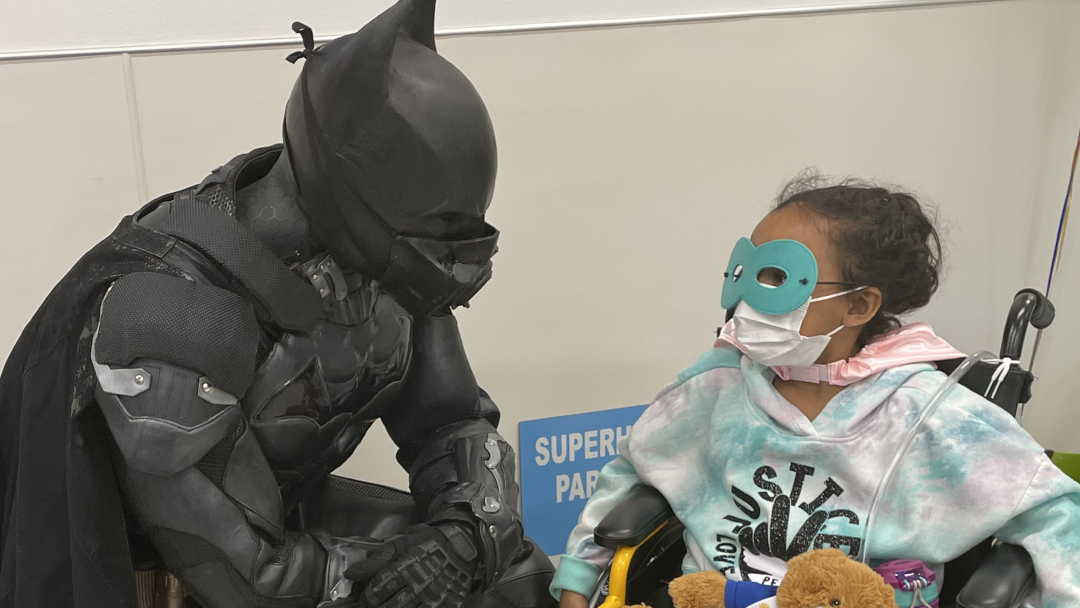
Why Superheroes Belong in Hospitals
Picture a six-year-old in a hospital bed, wearing a paper gown two sizes too big. He's tired. He misses home. He's had more blood draws this week than most adults have in a year. Then someone walks in and hands him a cape.
Watch what happens.
His posture changes. His eyes light up. For a few minutes, maybe longer, he's not a patient. He's a hero. That shift matters more than it looks like it does.
Bringing superhero themes into pediatric care isn't just a nice gesture. There's real research behind why it works, and it's also where Friends of Jack Foundation's own story begins.
The foundation's founder, Jill Fearons, saw it firsthand with her own son, Jack. During stressful procedures like MRIs and other scary hospital moments, putting a mask and cape on Jack changed his entire experience. It gave him something to hold onto and pulled his focus away from the fear in front of him. That moment is why capes and masks became central to what Friends of Jack does, and it's what eventually grew into the foundation's broader Superhero programming at hospitals and community events.
Play Is Not Optional in a Hospital
For children, play is how they make sense of the world. It's how they process emotions, rehearse scary things, and feel like they have some control when everything around them has been taken away.
When a child is hospitalized, normal play stops. The environment is foreign. Schedules are set by medical needs. Kids lose control over some of the most basic things in their lives, like when they sleep, what they eat, or whether they can go outside.
Child life specialists have known for decades that restoring play in a medical setting isn't a nice-to-have. It's clinically important. Play reduces anxiety, supports emotional regulation, and helps children cooperate with treatment in ways that make the care team's job easier too.
Superhero play, specifically, taps into something deeper.
What Happens When a Child Feels Like a Hero
There's a concept in psychology called self-distancing, and research shows it helps children get through hard things. When kids adopt a persona, especially a strong, brave one, they can access resilience they don't feel like they have as themselves.
A 2017 study published in Child Development found that children who were encouraged to think of themselves as a capable character stayed on task longer and worked harder than kids who didn't use that kind of imaginative framing.
In a hospital, this plays out in real ways. A child who is "Batman" getting a port accessed has a fundamentally different internal experience than a child who is just themselves, scared and alone. The identity shift isn't denial. It's a coping mechanism, and it works.
It Changes How Kids Experience Procedures
Child life specialists use superhero themes strategically, not just for fun. A cape or mask during a procedure serves as a psychological anchor. It gives the child something to hold onto mentally while something scary is happening physically.
Distraction is one of the most effective non-pharmacological tools for managing pain and fear in pediatric patients. When that distraction is tied to an identity a child chose for themselves, the effect is stronger. They become an active participant in their own coping, rather than someone things are being done to.
That sense of agency, even a small one, matters for kids facing serious illness.
It Builds Trust with the Adults Around Them
When a care team member engages with a child's superhero identity, something else happens: it builds trust. The medical world can feel cold and intimidating to a scared kid. A nurse who knows that the child in room 4 is "Captain America this week" and greets them as such has changed that entire relationship.
That trust matters when it's time for a hard conversation, a painful procedure, or a long night in the hospital. Kids who feel genuinely seen by the adults caring for them do better.
Friends of Jack has seen this play out well beyond the hospital, too. Former New Bedford Police Captain Joe Cordiero was skeptical at first when the foundation brought its Superhero program to the department. He took a box of bears and masks more out of courtesy than conviction. About a week later, he responded to a domestic case with a young girl in the back of his cruiser who had completely shut down and wouldn't speak. With no other options left, he reached for one of the masks and bears and gave it to her. Her demeanor changed immediately. She put it on and started talking to him. From that moment on, Cordiero became one of the program's strongest believers.
How Friends of Jack Brings This to Life
Friends of Jack Foundation understands that healing isn't only physical. The foundation supports child life programming and community events that bring joy, identity, and real connection to children and families going through some of the hardest experiences of their lives.
Whether it's through events that celebrate kids as the heroes they actually are, or through funding that keeps child life specialists in hospitals where this kind of work can happen, FOJ is committed to the whole child, not just the diagnosis.
Every child facing serious illness deserves to feel like they have some power. Friends of Jack is working to make sure they do. It started with one boy and one cape, and it hasn't stopped since.
Visit friendsofjack.org to learn more or get involved.


